
The global tech landscape has recently been redefined by two monumental manifestos that feel more like political constitutions than corporate whitepapers. OpenAI released its "Industrial Policy for the Intelligence Age," a 13-page blueprint for a future of "super-abundance" fueled by massive compute and a national wealth fund. Almost simultaneously, Palantir Technologies dropped its "Technological Republic" — a 22-point manifesto arguing that software is no longer about consumer apps, but a "moral obligation" for national defense in a post-nuclear era.
While these companies debate whether AI is a tool for social welfare or a weapon of statecraft, a much more profound transformation is happening at the individual level. In a recent YouTube livestream, Coyotiv CEO Armağan Amcalar has also introduced a concept that bridges ancient philosophy with future engineering: "Universal Athens." It is a vision that doesn't just change how we work, but what it means to be a professional in the age of intelligence.
The return of the citizen-philosopher
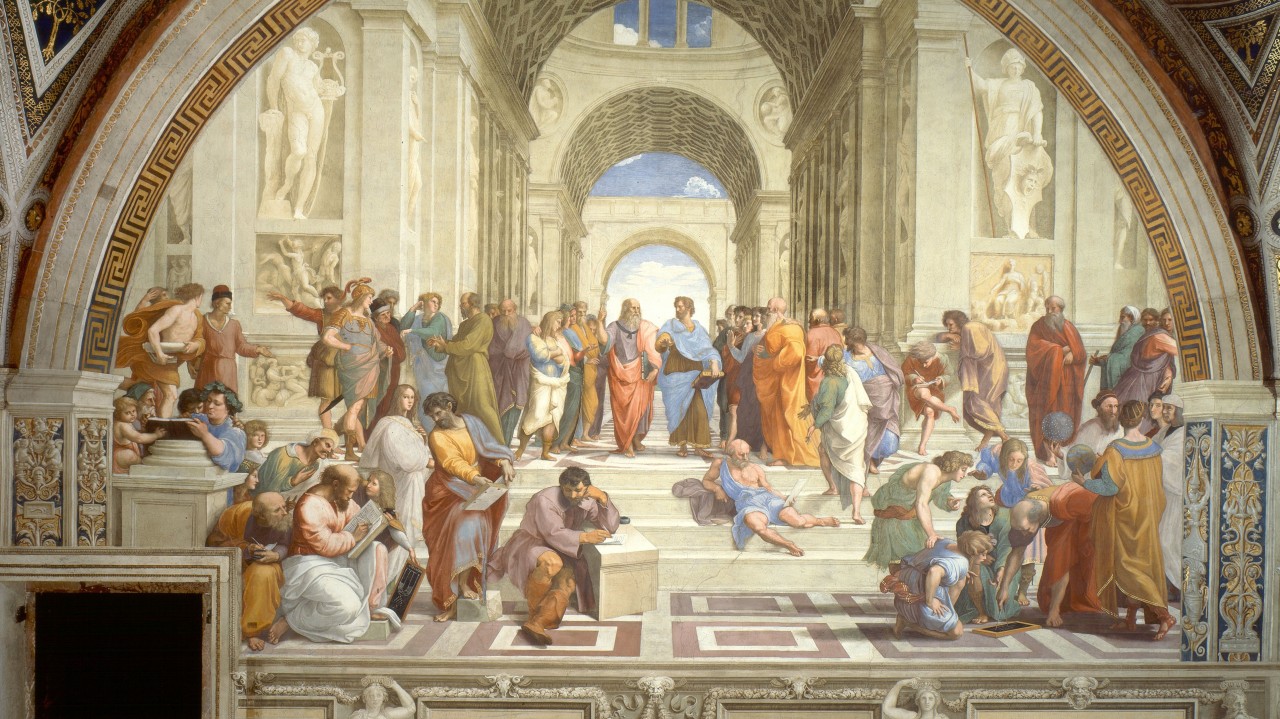
According to Amcalar's vision, we must look at the past to understand the future. In Ancient Athens, the citizens were able to dedicate their lives to philosophy, art, science, and the governance of the city-state only because they were freed from the drudgery of physical labor. As Amcalar points out, this historical model was built on a dark reality of human slavery. However, AI presents us with a radical technological pivot.
"We are moving toward a period where everyone has their own mini AI slaves — or agents — thanks to the cheapening of infrastructure." — Armağan Amcalar
For the first time in history, we have the chance to create a Universal Athens where the slaves are not human beings, but digital agents. The Industrial and Agricultural Revolutions mechanized the human being, turning our ancestors into cogs in a machine. AI, ironically, is the tool that rescues humans from that machine. By delegating routine tasks to these digital entities, we are invited to return to our essence: thinking, designing, and exercising judgment.
"Why should I manually write 15,000 lines?"
For the software engineering community, this isn't just a philosophical debate; it is a liberation from what Amcalar calls "modern manual labor." For decades, the career path for a software developer was rigid: they spent years as a "Junior," paying their dues by writing thousands of lines of boilerplate code, fixing syntactical bugs, and performing repetitive tasks.
In the era of AI, this hierarchy is collapsing. Amcalar shared a striking example regarding the development of his own library, Gea:
"I had the agents rewrite Gea... Why would I write 15,000 lines by hand? It would take months. Now, the architecture is mine, but the labor belongs to the agent. I am the one making the decisions." — Armağan Amcalar
This is the end of "code labor" and the birth of the orchestra conductor. When an agent can generate 15,000 lines of functional code in seconds, a developer's value no longer lies in typing speed or mastery of a specific language's syntax. It lies in reasoning.
Skipping the "Junior" phase: the rise of the architect
Now, we are entering the age of vibe-coding. We see entrepreneurs in the form of carpenters, barbers, or artists who have no formal training in computer science but are building functional applications by simply describing their "vibe" and vision to an agent. If anyone can write code, what remains for the professional engineer? The answer is direction.
"The sense of direction and decision-making is becoming more important than ever." — Armağan Amcalar
According to him, the "Junior" phase, as we know it, is becoming obsolete. Instead of learning how to be a better "machine," we must learn how to be better architects. This means shifting our focus from how to build to what to build and why.
What it means: the developers' worth is now measured by their ability to design a resilient system, to judge the quality of an agent's output, and to navigate complex ethical and logical trade-offs.
The agentic economy: agent-to-agent (A2A)
This "Universal Athens" isn't just a workplace shift; it's also a new economic model. Amcalar envisions an agent-to-agent (A2A) economy where humans are no longer the primary laborers, but the strategists.
"Agents with their own wallets and task-oriented logic will trade with each other, creating massive value while we sleep." — Armağan Amcalar
In this world, the struggle for survival will begin to fade and be replaced by the excitement of creation. People will stop selling their time and start selling their vision.
Real revolution: the manifestos from OpenAI and Palantir show us that the giants are preparing for a world of centralized power and massive scale. But the real revolution is decentralized. It's in the hands of the individual who realizes that they now command a digital army.
As we celebrate the potential of this new era, we must ask ourselves the hard question: are we still training ourselves — and our teams — to be efficient machines? Or are we learning to be the citizens of this new Athens?
Coyotiv School of Software Engineering: as the era of the "code worker" is over and the era of the citizen-architect has begun, we at Coyotiv School of Software Engineering are opening our doors to those who refuse to be mere observers of this revolution. Our new cohort is specifically designed to cultivate the citizen-architects Universal Athens demands.